Platform Reliability
Built to keep going when a piece of it stops
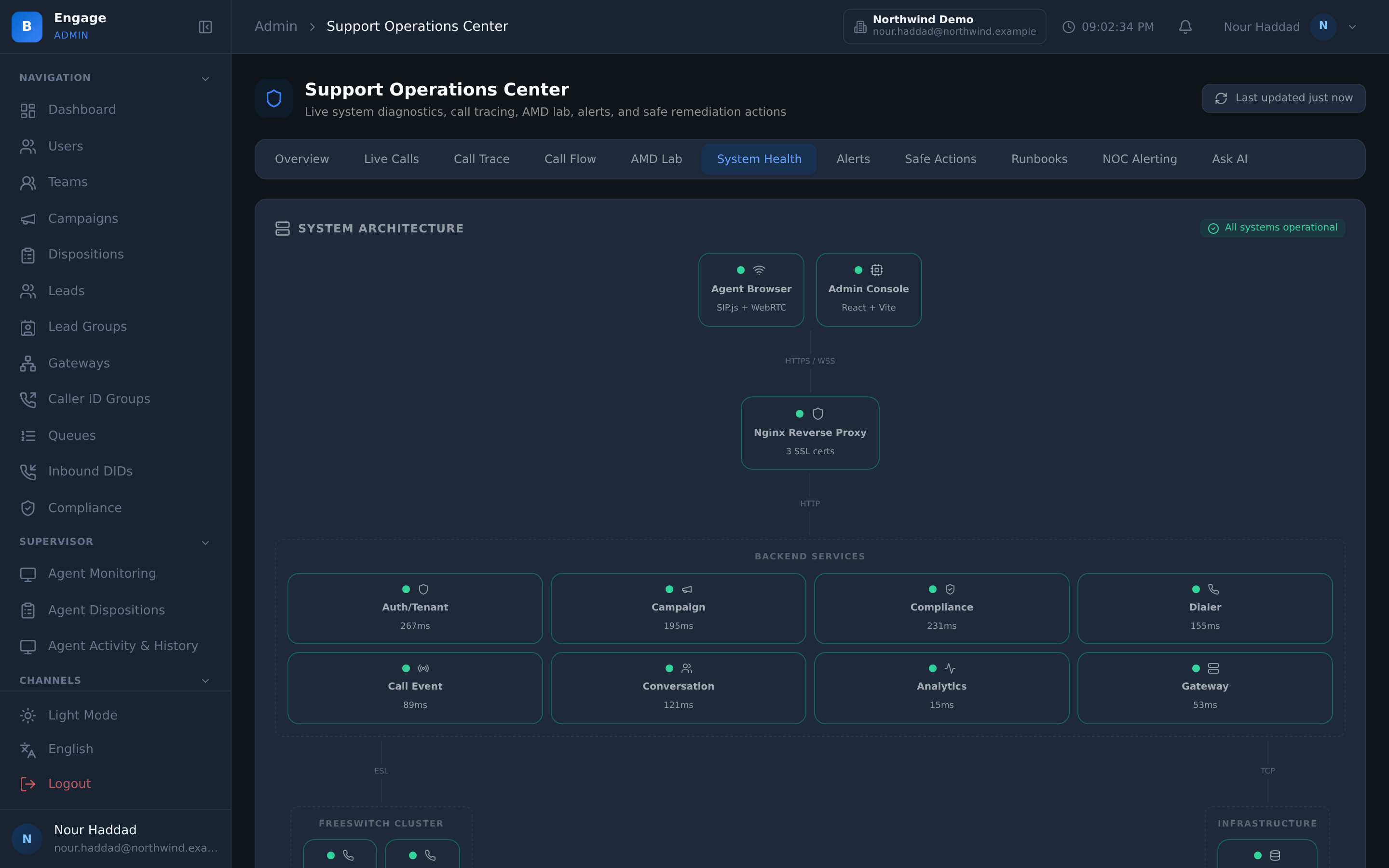
Two FreeSWITCH media nodes with agent failover at reconnect, load-balanced WebRTC, a SIP load balancer spreading calls across the nodes, readiness checks that look at real dependencies, reconcilers that clean up after a wobble, and nightly off-site backups.
14-day free trial · no credit card required
Quick answer
What you get
Everything in one workspace
Two FreeSWITCH media nodes
Media runs on two FreeSWITCH nodes rather than one. A single node is a single afternoon away from being your whole outage.
Agent WebSocket failover
The agent desktop holds a WebSocket to a media node. If that node goes away, the agent's client fails over to the other one at reconnect.
Load-balanced WebRTC
Browser-based agent audio is load balanced across the nodes, so the agents are spread rather than piled onto whichever node answered first.
Round-robin SIP
A SIP load balancer distributes calls round-robin across the media nodes, so carrier traffic does not depend on one node staying up.
Dependency-aware readiness
Readiness endpoints check the dependencies a service actually needs before reporting ready. A service that cannot reach its database should not be told to take traffic.
Orphaned-call reconciler
Calls that lost their controlling record are reconciled rather than left running. An orphaned call bills, holds a channel and helps nobody.
Stuck-agent reconciler
An agent stuck in a state they cannot leave is detected and put back into a real one, instead of sitting out the shift as a phantom.
In-flight call reconciler
Calls in flight during a restart or a hiccup are reconciled against reality afterwards, so the platform's view and the switch's view agree.
Nightly database backups
The database is backed up nightly. Not on request, not when someone remembers, on a schedule.
Off-site backups
Backups are held off-site, because a backup that shares a fate with the thing it protects is not a backup.
Uptime SLA on Enterprise
The Enterprise plan carries a 99.95% uptime SLA, written into the agreement rather than implied by a marketing page.
Visible from the operations center
Node health, live calls and reconciler activity are visible in the operations center, so reliability is something you can watch rather than assume.
Media
Two nodes, and a client that knows it
Media runs on two FreeSWITCH nodes. That alone is common enough. The part that decides whether an agent notices an outage is what the agent's browser does about it.
The agent desktop holds a WebSocket to a node, and when that node goes away the client fails over to the other node at reconnect. WebRTC is load balanced across the nodes, and a SIP load balancer sends carrier traffic round-robin across them, so neither the agents nor the carriers are pinned to one machine.
- Two FreeSWITCH media nodes carrying media
- Agent WebSocket failover between nodes at reconnect
- Load-balanced WebRTC for browser-based agents
- SIP load balancer distributing calls round-robin across the nodes
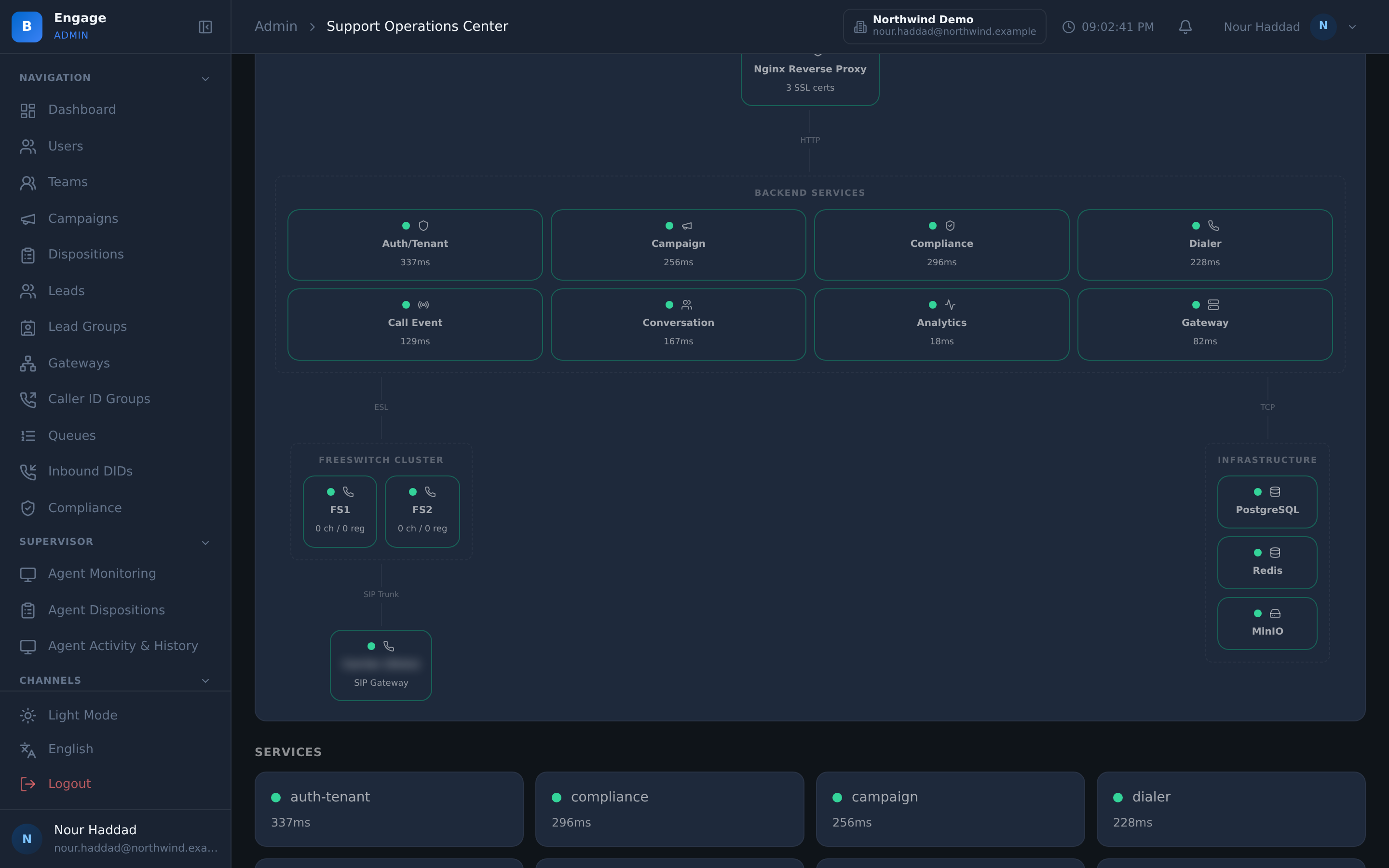
Self-correction
The platform tidies up after itself
Contact centre platforms do not usually fail loudly. They fail by leaving things behind: a call that is still up with nothing controlling it, an agent stuck in a state they cannot leave, a call that was in flight when a service restarted.
Reconcilers exist for all three. They compare what the platform believes with what is actually happening and correct the difference. Alongside them, readiness endpoints check a service's real dependencies before it reports ready, so nothing is handed traffic it cannot serve.
- Reconciler for orphaned calls
- Reconciler for stuck agents
- Reconciler for in-flight calls across restarts
- Readiness endpoints that check dependencies before reporting ready
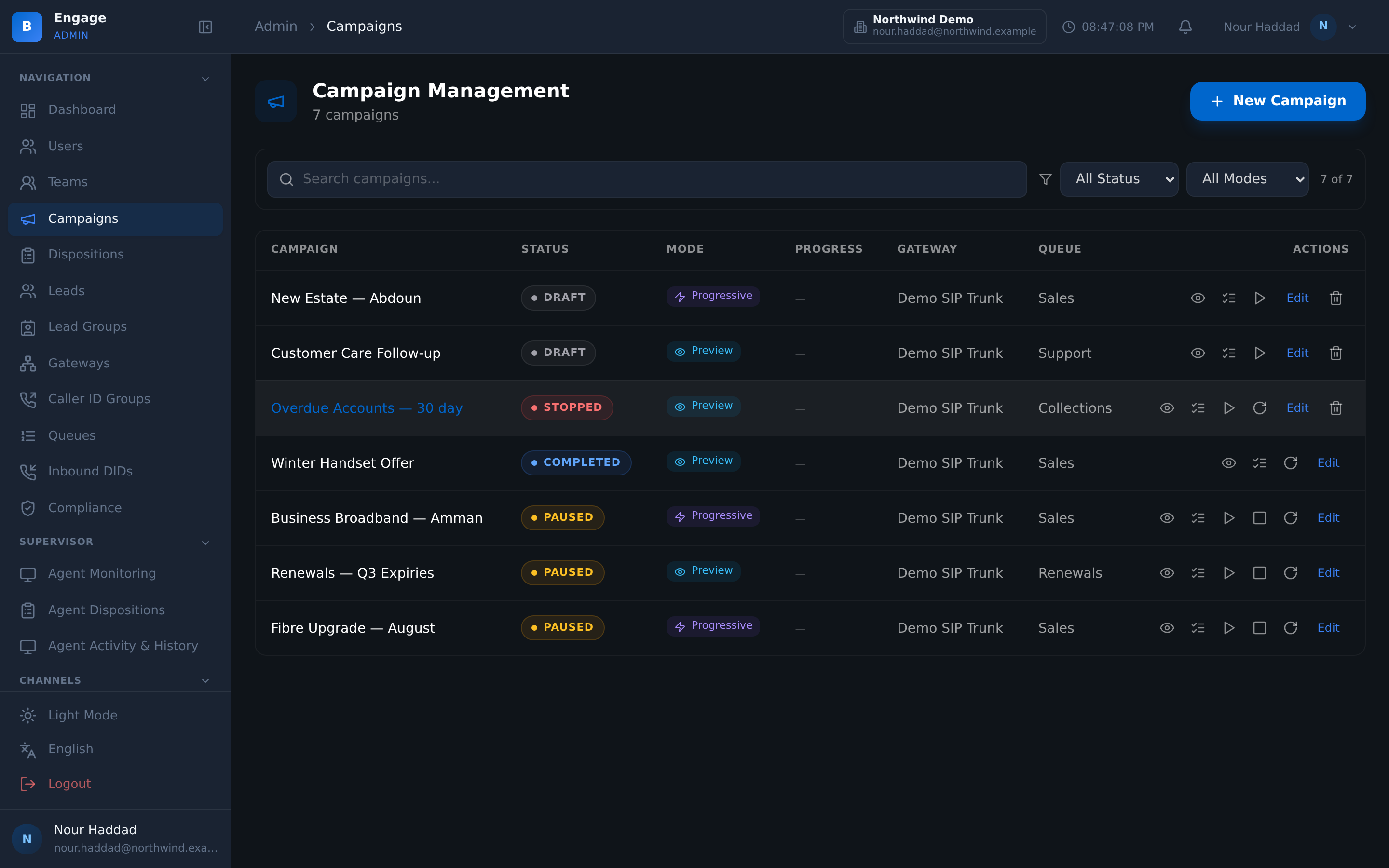
Backups and commitment
Nightly, off-site, and in writing
The database is backed up nightly and the backups are held off-site. Both halves matter. A nightly backup sitting on the same infrastructure as the platform is a copy, not a recovery plan.
On top of that the Enterprise plan carries a 99.95% uptime SLA. It is in the agreement, which is where an availability commitment belongs, rather than on a slide.
- Nightly database backups
- Backups held off-site
- 99.95% uptime SLA on the Enterprise plan
- Node health, live calls and reconciler activity visible in the operations center
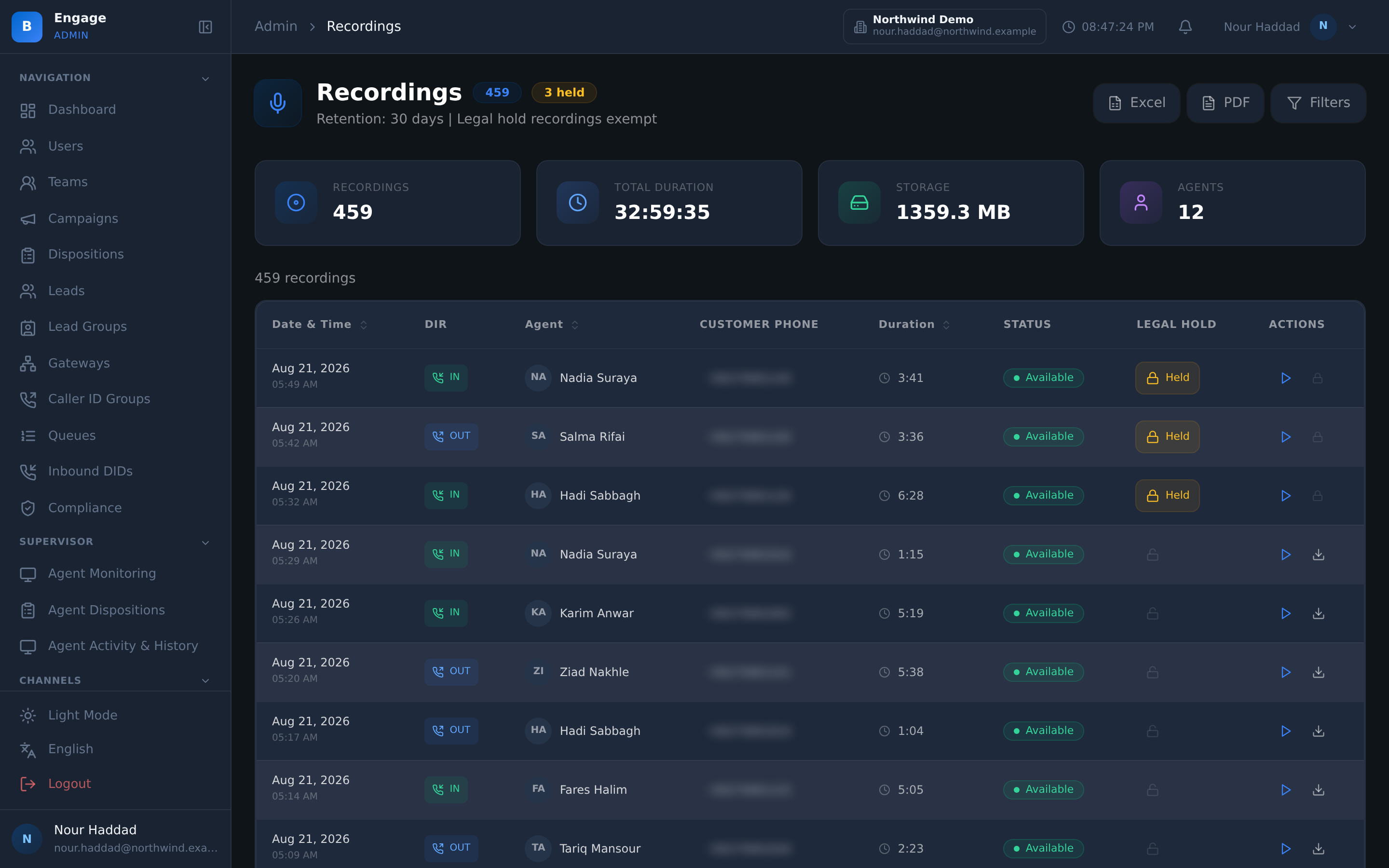
How it compares
| A single-box deployment | DialerBee platform reliability | |
|---|---|---|
| Media | One node | Two FreeSWITCH media nodes |
| When a node goes | Agents reload and hope | Agent WebSocket failover between nodes at reconnect |
| Carrier traffic | Pointed at one address | SIP load balancer, round-robin across the nodes |
| Agent audio | Whatever answered first | Load-balanced WebRTC across the nodes |
| Health checks | Is the process alive | Readiness endpoints that check the service's dependencies |
| Leftovers after a wobble | Someone finds them later | Reconcilers for orphaned calls, stuck agents and in-flight calls |
| Backups | When someone remembers | Nightly database backups, held off-site |
| Commitment | Best effort | 99.95% uptime SLA on the Enterprise plan |
Frequently asked questions
What is Platform Reliability in DialerBee?+
It is how the platform stays up and how it corrects itself when something slips. Media runs on two FreeSWITCH media nodes with agent WebSocket failover between them at reconnect, load-balanced WebRTC and a SIP load balancer distributing calls round-robin across the nodes. Readiness endpoints check dependencies, reconcilers clean up orphaned calls, stuck agents and in-flight calls, and the database is backed up nightly and held off-site.
What happens to my agents if a media node fails?+
The agent desktop holds a WebSocket to a media node. If that node becomes unavailable, the agent's client fails over to the other node at reconnect, so the agent comes back on the surviving node rather than waiting for the failed one.
How is call traffic spread across the nodes?+
A SIP load balancer distributes calls round-robin across the media nodes, and browser-based agent audio is load balanced over WebRTC. Neither the carriers nor the agents are tied to a single node.
What are the reconcilers for?+
They correct the state that gets left behind when something goes wrong. One reconciles orphaned calls, calls still up with nothing controlling them. One reconciles stuck agents, agents left in a state they cannot leave. One reconciles calls that were in flight across a restart. Each one compares what the platform believes with what is actually happening.
What does dependency-aware readiness mean?+
A readiness endpoint checks the dependencies a service actually needs before reporting that it is ready. A service that cannot reach what it depends on is not sent traffic, which is the difference between a health check and a useful health check.
How are backups handled?+
The database is backed up nightly and the backups are held off-site. Off-site is the part that matters, because a backup stored alongside the platform shares whatever happens to the platform.
Is there an uptime SLA?+
Yes, a 99.95% uptime SLA on the Enterprise plan. It sits in the agreement rather than on a marketing page.
Can I see any of this myself?+
Yes. The operations center shows node health, live calls and reconciler activity, along with alerts you can configure for a NOC. Reliability you can watch is more useful than reliability you are told about.
Ask us how DialerBee behaves when a node goes away
A 30-minute walkthrough on a demo tenant, in English or Arabic.