Australia
Call centre software in Australia, built around the Do Not Call Register
For Australian telemarketing, sales, collections and research teams, and for offshore BPOs calling on behalf of Australian clients: suppression checked before each attempt, calling hours you set from the ACMA table, caller ID on every call, and calls on your own carrier.
14-day free trial · free AI credit to try the AI voice agent · no card needed
Quick answer
What you get
Everything in one workspace
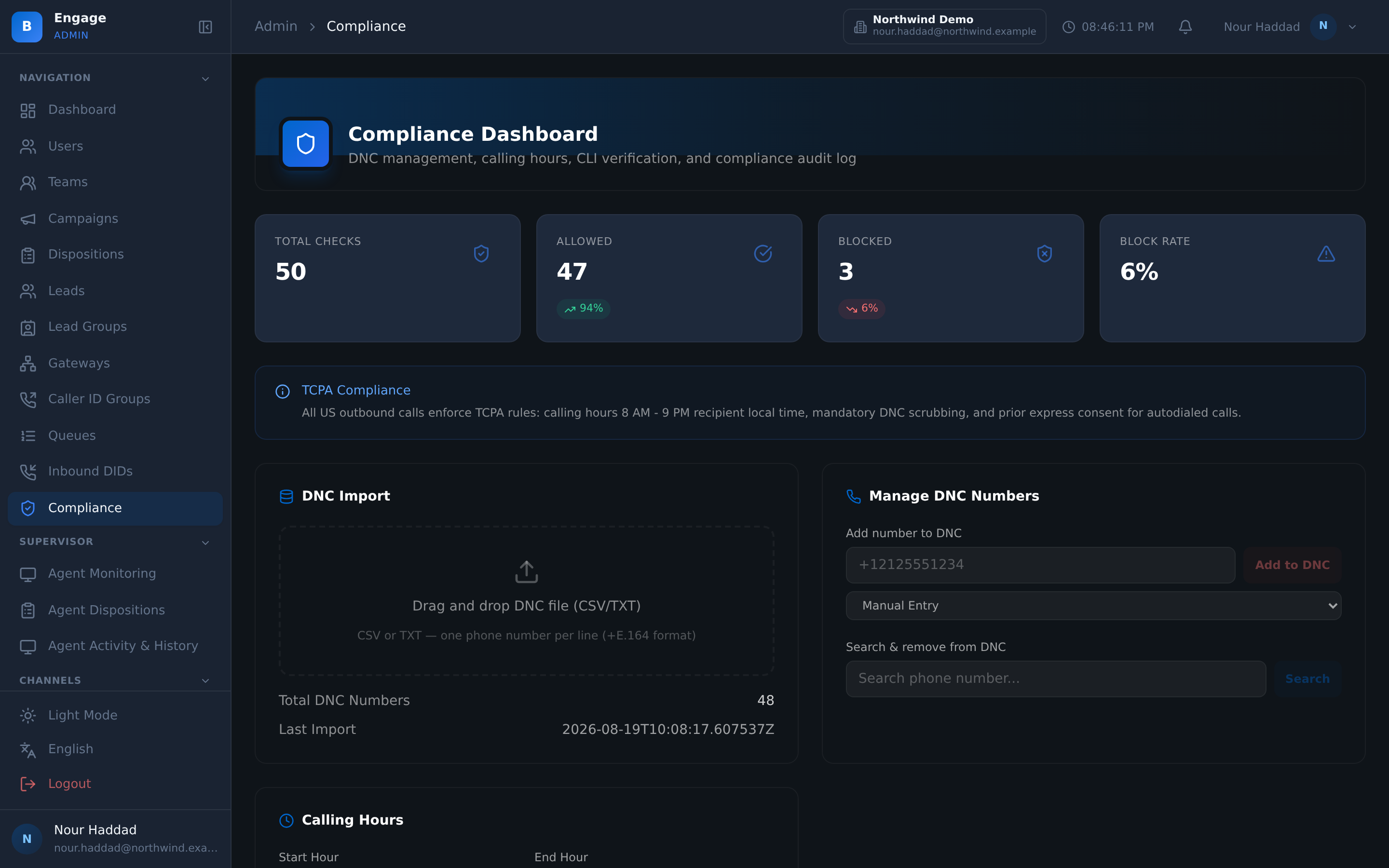
Suppression checked at the call
Load the register data you are entitled to use, and your own suppression list, as DNC lists. Each call is checked when it is made, so a number added this morning is caught this afternoon.
Calling hours you set
Calling hours in DialerBee are set per jurisdiction, so set the Australian hours yourself from the ACMA table on this page. DialerBee has no Australian rule pack, so the hours are a rule you configure and can show.
Caller ID on every call
Present numbers from managed caller-ID pools, with selection modes you choose. A number belongs to one tenant, so it never appears on another client's calls.
Consent and objection records
Record a consent, update it and revoke it, so each contact carries a history. A human override is recorded too.
Recording and retention
Recording is configurable per campaign and per tenant, with retention you set within your plan (30 days on Starter, 90 days on Professional, one year on Enterprise) and legal hold for what you must keep.
Your Australian carrier through BYOC
Connect the SIP trunks you already contract, with failover between carriers. Your carrier bills the minutes, with no per-minute platform fee.
Australian rules in plain terms
What calling hours apply to telemarketing in Australia?
The Do Not Call Register site, run by the ACMA, sets out the Telecommunications (Telemarketing and Research Calls) Industry Standard 2017. Telemarketers and researchers may call only in the times below, unless the consumer has consented to being called at that time (source: donotcall.gov.au, checked 2026-11-19).
| Type of call | Weekdays | Saturday | Sunday | National public holidays |
|---|---|---|---|---|
| Telemarketing calls | 9:00am to 8:00pm | 9:00am to 5:00pm | No calls allowed | No calls allowed |
| Research calls | 9:00am to 8:30pm | 9:00am to 5:00pm | 9:00am to 5:00pm | No calls allowed |
The same page says national public holidays include New Year's Day, Australia Day, Good Friday, Easter Monday, Anzac Day, Christmas Day and Boxing Day, including any day given in lieu.
The standard applies to any individual or organisation that makes or arranges these calls to Australian numbers, even numbers that are not on the register. A business that is exempt from the Do Not Call Register Act 2006, such as a registered charity, must still meet the standard.
The table is copied from the ACMA-run page. Confirm the current version before you set a window, and see our Australia regional guide for the wider picture.
Caller ID, the register and privacy
What does the standard require beyond calling hours?
Three rules matter to a dialler. First, calling line identification: a caller must ensure CLI is enabled at the time they make or attempt to make a call, and the return contact numbers must stay available for at least 30 days from the original call.
Second, a person who calls back must be able to learn, within a reasonable time, the name of the caller's employer and the purpose of the call. For telemarketing calls they must also be able to learn who caused the call to be made.
Third, ending calls. A caller must end a call immediately if asked, or if the consumer otherwise indicates they do not want to continue. They must also end it if they learn the person is away from their usual residential address and the time at that location is outside permitted times, unless the person says they want to continue.
How does the Do Not Call Register Act fit in?
Section 11 of the Do Not Call Register Act 2006 is headed: unsolicited telemarketing calls must not be made to a number registered on the Do Not Call Register (source: legislation.gov.au, checked 2026-11-19). A dialler cannot decide what is unsolicited or exempt. It can make sure the list you give it is checked at every attempt, and that a record exists of what ran.
Personal information is a separate subject. Schedule 1 to the Privacy Act 1988 contains Australian Privacy Principle 7, on direct marketing (source: legislation.gov.au, checked 2026-11-19). Read it with your counsel before a list reaches the dialler, and document your purpose and retention periods.
How does DialerBee map to each rule?
- Register and own list. Load the register data you are entitled to use, and your own suppression list, as DNC lists. Each call is checked at the dial.
- Calling hours. Set the Australian calling hours from the table above. DialerBee sets calling hours per jurisdiction, not per campaign, so ask on a demo how to keep research and telemarketing hours apart. Time zones: ask on a demo how your Australian contacts will be handled, because the site documents taking the zone from the number for US calling only.
- Caller ID. Present numbers from caller-ID pools. Each belongs to one tenant, and your carrier authorises the numbers.
- Evidence. Consent records with history, audited overrides, and call recordings with retention you set.
DialerBee does not itself guarantee that a campaign meets any of these rules. It gives compliance-supporting controls and a record.
Pricing
What does DialerBee cost for an Australian team?
Prices are in US dollars per seat per month, and one seat covers inbound and outbound. Starter is $69 for up to 20 agents with preview and power dialling. Professional is $129 for up to 100 agents with all four dialling modes, whisper and barge. Enterprise is custom, with unlimited agents, multi-tenant management and white-label. Annual billing saves 20 percent.
For example, 25 Professional seats are $3,225 a month, or about $2,580 a month with the 20 percent annual saving, before carrier minutes. That is an example, not a quote. Your Australian carrier bills the minutes, and DialerBee adds no per-minute platform fee on BYOC. AI usage is included in the seat price for now: no extra charges at launch.
The 14-day free trial includes free AI credit and needs no card. Self-serve sign-up runs on your own telephony: you connect your own SIP trunk or PBX, and calling starts once that line is connected and approved.
How do you set up an Australian outbound campaign?
- Connect your own Australian SIP trunk or PBX, with failover to a second carrier if you have one (BYOC).
- Load the register data you are entitled to use and your own suppression list as DNC lists (compliance controls).
- Build a caller-ID pool from numbers your carrier has authorised (caller-ID pool control).
- Set the Australian calling hours from the ACMA table, and create one campaign per call type.
- Set the frequency limit and the consent rules, with your counsel's guidance, and pick the dialling mode (predictive dialler).
- Review calls and outcomes, and run research campaigns as surveys where they fit (surveys and CX).
Sales teams can read more on the sales solutions page, and outsourcers on the BPO page.
Sources
- Do Not Call Register, industry standards (ACMA-run site) (source, checked 2026-11-19)
- Do Not Call Register Act 2006, section 11 (source, checked 2026-11-19)
- Privacy Act 1988, Schedule 1 (source, checked 2026-11-19)
Last reviewed November 19, 2026. This page is for operational education only and is not legal advice. DialerBee does not provide legal advice or guarantee regulatory compliance. Confirm current requirements with the ACMA and qualified counsel before you launch.
Telemarketing and sales
Check the register, then the clock
Section 11 of the Do Not Call Register Act 2006 is headed: unsolicited telemarketing calls must not be made to a number registered on the Do Not Call Register. The industry standard then adds hours, caller ID and return-number rules that apply to any individual or organisation making or arranging these calls, even to numbers not on the register.
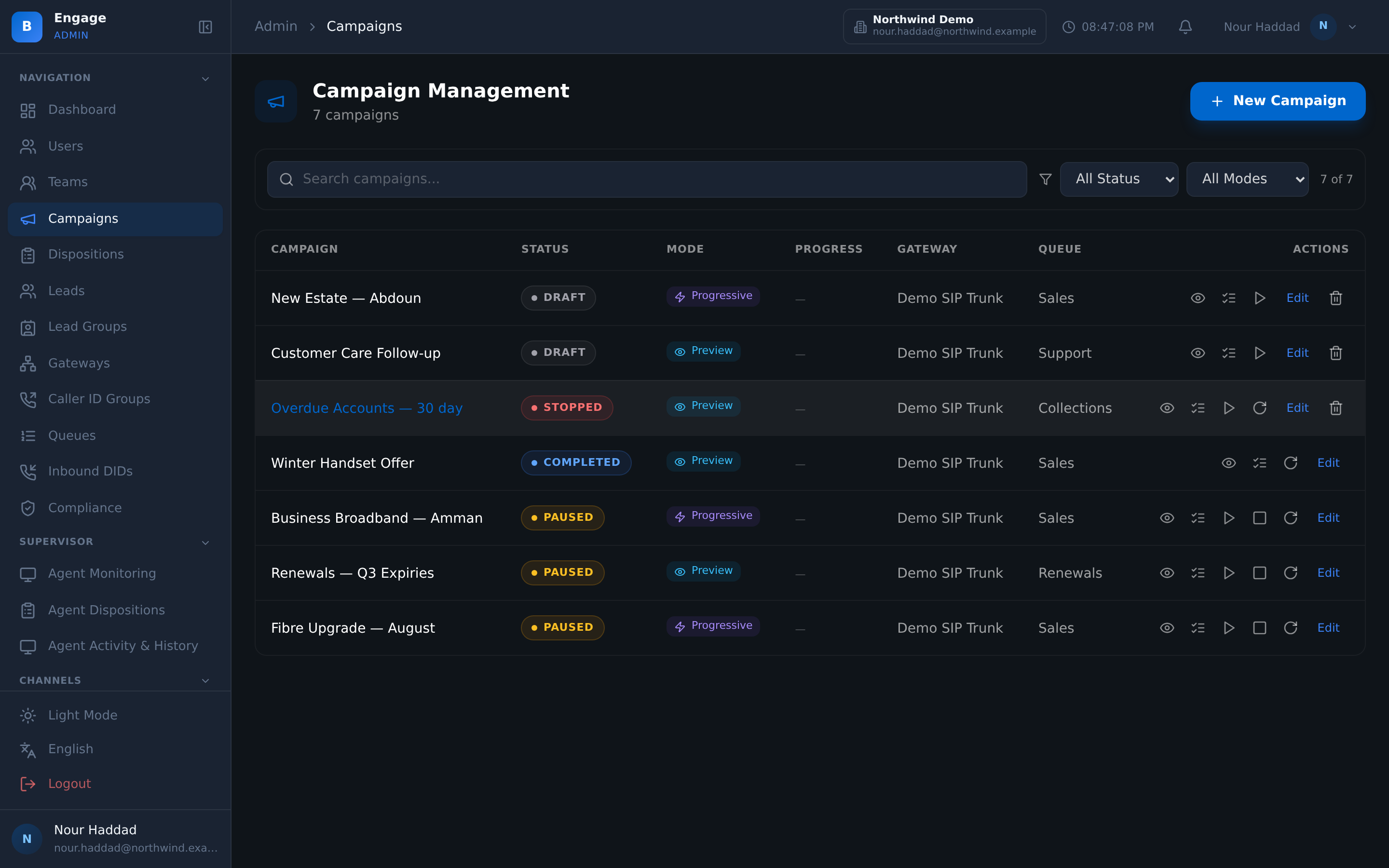
In DialerBee each dial passes the compliance checks first: DNC lists, consent record, caller ID, frequency limit and number format. Preview and power dialling are on every plan, and progressive and predictive dialling are on Professional and Enterprise. See the predictive dialler and the compliance controls.
- A frequency limit per contact, so the same person is not called again and again
- Overrides are recorded, so a human decision leaves a trace
Research and survey teams
Research calls have their own hours
The ACMA table treats research calls differently: a later weekday finish and Sunday calling that telemarketing does not have. DialerBee sets calling hours per jurisdiction rather than per campaign, so a team that runs both research and telemarketing calls should ask on a demo how to keep the two sets of hours apart before it plans a programme.
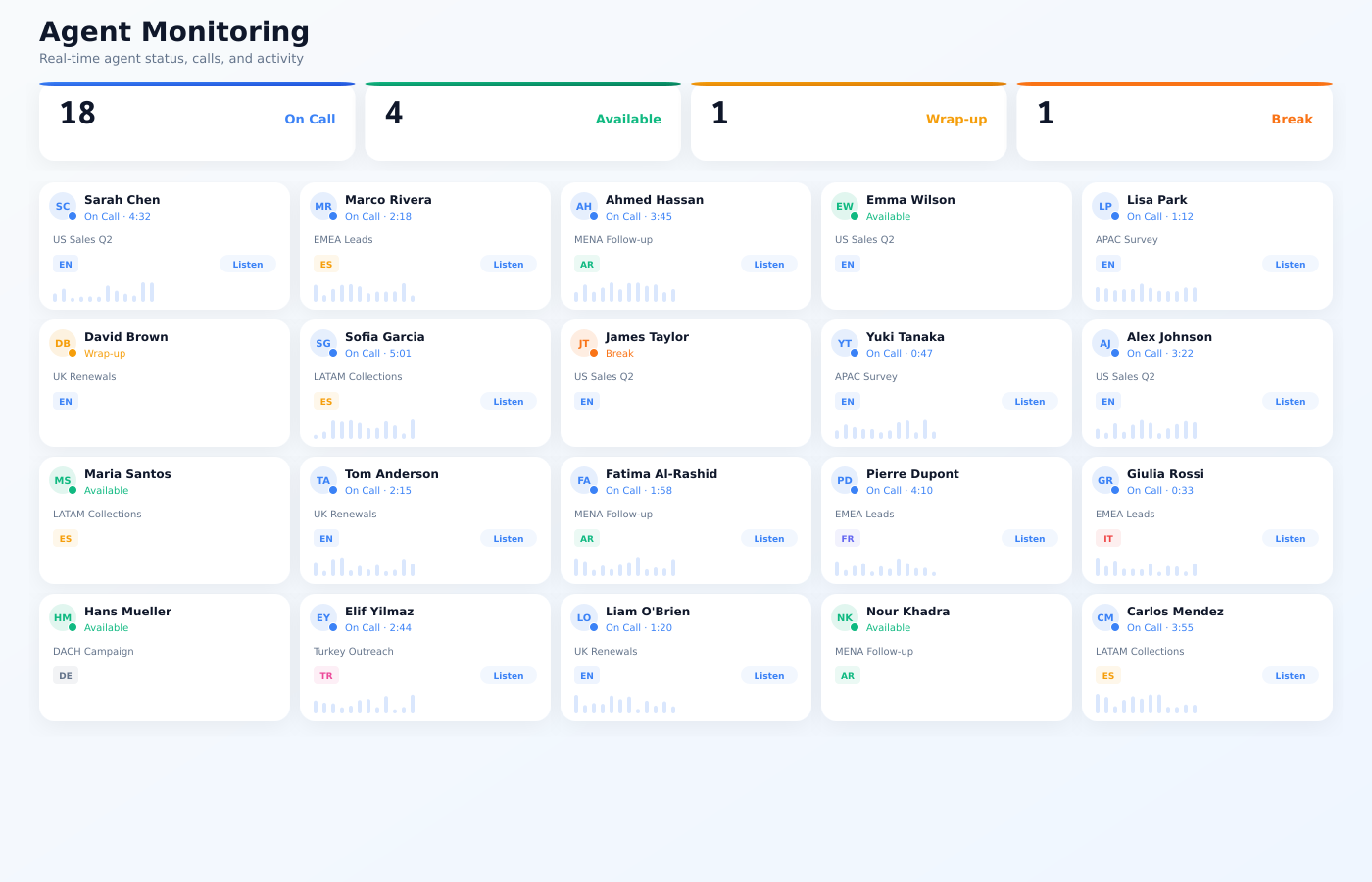
DialerBee runs surveys as voice IVR surveys, AI voice surveys or outbound survey campaigns with pacing and quotas, with analytics that state what each number is out of. Surveys are on Professional and Enterprise. See surveys and CX.
- Research and telemarketing kept in separate campaigns, so each is reported on its own
- Survey results exported with their denominators
Offshore BPOs serving Australian clients
One tenant per client, wherever the floor sits
Many Australian brands outsource calling to teams overseas. In DialerBee each client is a tenant with its own DNC lists, calling windows, consent rules, caller IDs and reports, kept apart in the database by row-level security. Multi-tenant management and a white-label option are on Enterprise. See the BPO solutions and the Philippines page.
An Australian client can run beside a client in another country on the same floor, each with its own rules.
- Caller IDs owned by one tenant, never shared between clients
- AI usage metered per tenant, so you can see what each client used
English overflow
An English AI voice agent for the calls nobody is free to take
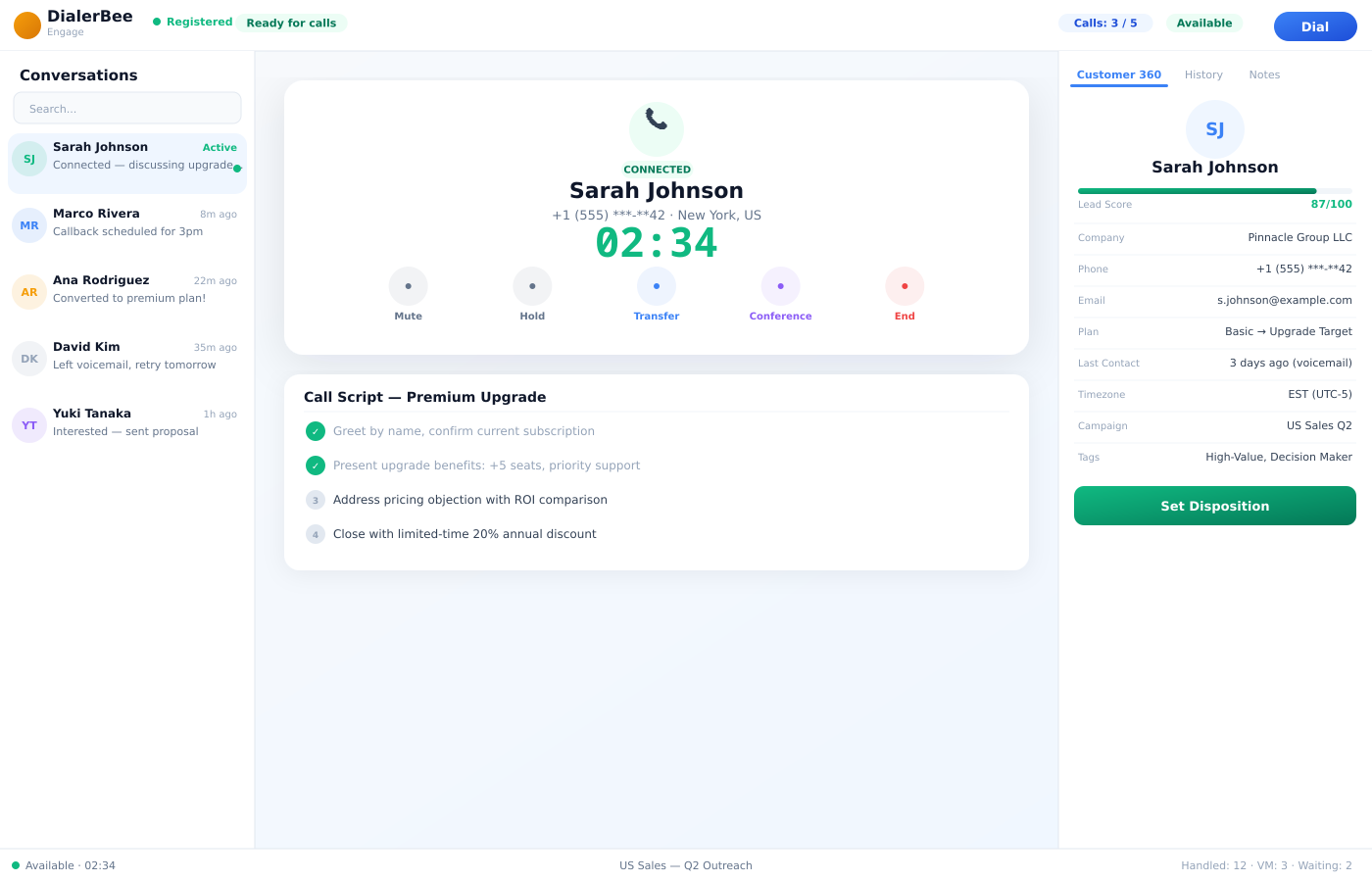
When every agent is busy, callers can wait, request a callback or be answered by Layla on a number routed to her. She answers from documents you upload, quotes only catalogue prices and hands off to a person. Layla has run on live calls in Arabic and English. For any other language, test it on a demo first.
Hear her before you plan a programme: Talk to Layla now, a live demo in your browser.
- On Professional and Enterprise, with AI usage included in the seat price for now
- Free AI credit included in the 14-day trial
Frequently asked questions
How much does call centre software cost for an Australian team?+
Starter is $69 and Professional $129 per seat per month, in US dollars, and Enterprise is priced on request. Annual billing saves 20 percent. Your own carrier bills the minutes, with no per-minute platform fee. The AI voice agent is on Professional and Enterprise, and AI usage is included in the seat price for now.
What calling hours apply to telemarketing in Australia?+
The ACMA-run Do Not Call Register site lists telemarketing calls on weekdays from 9:00am to 8:00pm and on Saturdays from 9:00am to 5:00pm, with no calls on Sundays or national public holidays, unless the consumer has consented to being called at that time. Research calls have different hours. Confirm the current table before you set a window.
Can DialerBee screen numbers against the Do Not Call Register?+
DialerBee checks every call against the DNC lists you load, and your own suppression list, at the moment of the call. You load the register data you are entitled to use as a list. DialerBee has no Australian rule pack, and it does not decide for you which calls are exempt.
Does DialerBee show our caller ID on every call?+
You present numbers from your caller-ID pools, and each number belongs to one tenant. The industry standard says a caller must ensure calling line identification is enabled when a call is made or attempted, and that return numbers stay available for at least 30 days. Which numbers you may present depends on your carrier and your number rights.
How are time zones handled across Australia?+
The ACMA text says a caller must end a call when they learn the person is away from their usual residential address and the time at the person's current location is outside permitted times, unless the person asks to continue. DialerBee documents taking the time zone from the number for US calling only. For Australian lists, ask on a demo how your contacts' time zones will be handled before you plan a campaign.
Can we use our own Australian carrier?+
Yes. BYOC connects the SIP trunks you already contract, with failover between trunks, and your carrier bills the minutes directly. A self-serve trial connects your own SIP trunk or PBX. DialerBee's carriers are available through sales.
Does the AI voice agent speak Australian English?+
Layla has run on live calls in Arabic and English. The live demo is the fastest way to judge how she sounds for your callers: test it on a demo first. For any other language, ask on a demo before you plan a campaign.
See DialerBee on your own Australian carrier and your own campaign
A 15 to 20 minute walkthrough on a demo tenant, in English or Arabic.